アイスランド海洋研究所、カペリン初期枠35.8万トン(81%増)を発表
Capelin Quota in Iceland Rises 81% to 358,044 MT
2026年6月12日、アイスランド海洋研究所(Hafrannsóknastofnun)は、2026/2027漁期に向けた主要水産資源の評価結果と漁獲勧告を発表した。
今回の発表で最も注目されるのは、カペリン(Loðna)の漁獲枠が大幅に増加したことである。
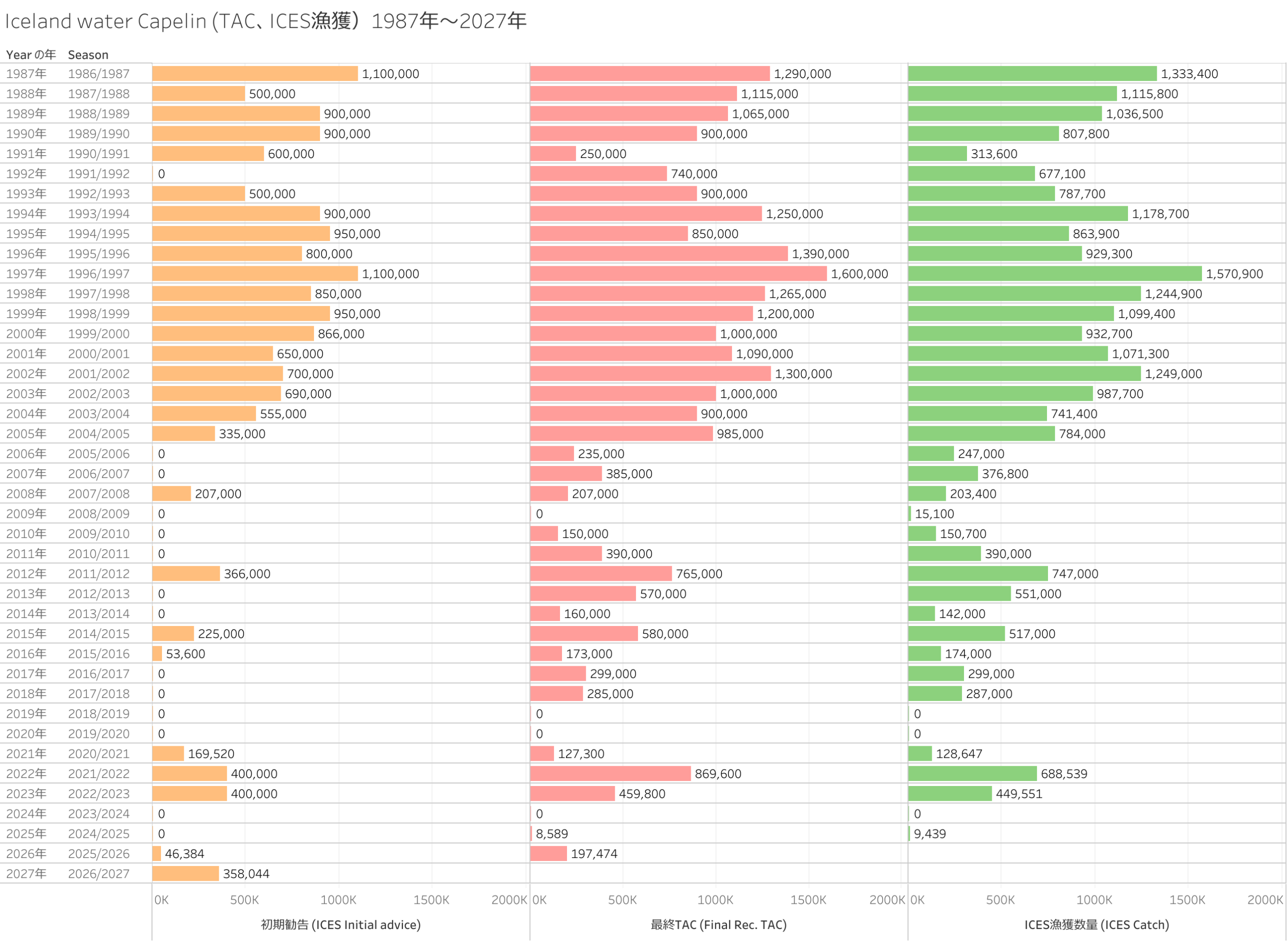
海洋研究所は、2026年冬漁期のカペリンについて、沿岸国間で合意された漁獲管理ルールに基づき、初期漁獲枠を358,044トンと勧告した。これは前漁期の最終勧告と比較して81%増となる大幅な引き上げであり、近年低迷していた資源状況からの回復を示す内容となった。
もっとも、この数量は現時点での「初期勧告」であり、今後実施される秋季調査の結果を踏まえて改めて見直される予定である。そのため、実際の最終漁獲枠は今後の資源調査結果によって増減する可能性がある。
一方、白身魚資源では主要魚種の多くで減少傾向が見られた。アイスランド漁業の中心魚種であるタラ(Cod)は1%減の201,674トン、ハドック(Haddock)は20%減の63,206トン、サイス(Saithe)は16%減の49,887トンと、それぞれ減少勧告となった。
特にタラについては、2021年および2022年級群の加入量が平均を下回ることに加え、近年のカペリン資源低迷の影響により成長速度が鈍化していることが背景として挙げられている。カペリンはタラにとって重要な餌資源であり、その資源変動がアイスランドの海洋生態系全体に大きな影響を与えていることが改めて示された。
そのほか、ゴールデンレッドフィッシュ(Golden Redfish)は5%増の43,319トン、グリーンランドハリバット(Grálúða)はほぼ横ばいの21,079トンとなった。一方、アイスランド夏産卵ニシン(Icelandic Summer-Spawning Herring)は22%減の80,307トンと大きく引き下げられている。
今回の発表を見る限り、2026/27シーズンのアイスランド漁業において最大の明るい材料はカペリン資源の回復であると言える。今後予定される秋季資源調査の結果が、最終的な漁獲枠および市場動向を左右する重要なポイントとなりそうだ。
【引用】
アイスランド海洋研究所(Hafrannsóknastofnun)
「Ástand nytjastofna sjávar og ráðgjöf fyrir fiskveiðiárið 2026/2027」
原文はこちら
On June 12, 2026, the Icelandic Marine and Freshwater Research Institute (MFRI) published its annual assessment of key fish stocks and catch recommendations for the 2026/27 fishing year.
The most notable announcement was a significant increase in the recommended capelin quota.
According to MFRI, the initial capelin catch recommendation for the upcoming winter season is 358,044 tonnes, based on the harvest control rule agreed upon by the coastal states. This represents an 81% increase compared with the final recommendation for the previous fishing season and suggests a substantial improvement in the status of the capelin stock.
However, this figure should be viewed as an initial recommendation. The quota will be updated following the autumn capelin survey, and the final allowable catch may increase or decrease depending on the survey results.
In contrast, several major groundfish species showed weaker outlooks. The recommended cod quota was reduced by 1% to 201,674 tonnes, while haddock declined by 20% to 63,206 tonnes and saithe by 16% to 49,887 tonnes.
For cod, MFRI noted that the 2021 and 2022 year classes are below average. In addition, year classes from 2019 to 2021 have exhibited slower growth, which is believed to be linked to the reduced abundance of capelin in recent years. As capelin is one of the most important prey species for cod, fluctuations in the capelin stock continue to have a significant impact on the wider Icelandic marine ecosystem.
Among other key species, the recommended quota for golden redfish increased by 5% to 43,319 tonnes, while Greenland halibut remained largely unchanged at 21,079 tonnes. The recommendation for Icelandic summer-spawning herring, however, decreased by 22% to 80,307 tonnes.
Overall, the recovery of the capelin stock is the most encouraging development in Iceland’s fisheries outlook for the 2026/27 season. Market participants will now be closely watching the results of the autumn survey, which will play a decisive role in determining the final capelin quota and the overall market situation for the coming season.
Source:
Icelandic Marine and Freshwater Research Institute (MFRI)
“Ástand nytjastofna sjávar og ráðgjöf fyrir fiskveiðiárið 2026/2027”