ノルウェーの漁業資源が2013年から半減、カペリンとタラの生態系にも変化――海洋研究所が従来の資源管理の見直しを提言
Norway's Fishery Resources Have Halved Since 2013 — Changing Marine Ecosystems and the Relationship Between Capelin and Cod Prompt Calls for New Fisheries Management
2000年代半ば、ノルウェー周辺海域には産卵回遊する北東北極系タラ(skrei)が豊富に存在していた。しかし、そうした黄金時代が近い将来に戻ることは期待できないという。
Kvamstø所長は、今後の漁業について「できるだけ多く漁獲するのではなく、いかに適切に漁獲するかを重視しなければならない」と述べ、漁業政策や資源管理の柔軟な見直しを求めた。
『ノルウェー周辺海域の漁業資源は2013年から半減』
HIが公表した「Ressursoversikt 2026(2026年資源概況)」によると、ノルウェー周辺海域の漁業資源の総量は、ピークだった2013年と比較して半減している。
特に北東北極系タラでは、過去20年間にわたり若齢魚の資源加入が低迷しており、その原因は十分に解明されていなかった。
しかし、新たな研究結果は、海水温の上昇をはじめとする気候変動が、資源加入の低迷を引き起こす主要な要因の一つである可能性を示している。
Kvamstø所長は、海洋環境の変化が加速している以上、漁業政策や資源管理も迅速に調整できる仕組みが必要だと指摘した。
『気候変動による不確実性を漁獲枠に反映』
HIの研究部門責任者Geir Huseは、気候変動に伴う物理的・化学的・海洋学的な変化が、魚類の生息環境を根本的に変える可能性があると警告した。
そのうえで、資源管理の不確実性が高まる場合には、漁獲枠の設定に追加的な安全余裕を設けることが必要だと提案した。
これは、気候変動が魚類の繁殖や資源加入に及ぼす影響を考慮し、資源の回復力を維持するための措置である。
また、漁獲可能な魚の最低体長についても、漁業界と管理当局の妥協ではなく、生物学的な根拠に基づいて設定すべきだと指摘した。
魚が十分に成長し、少なくとも産卵できる大きさに達してから漁獲することが、資源の持続可能性を確保するうえで重要になるという。
『カペリンとタラの関係を考慮した資源管理』
HIは、今後の資源管理において、魚種ごとに個別管理する従来の方法だけでなく、複数の魚種の相互関係を考慮する「複数魚種資源管理」の重要性を強調している。
この考え方は、すでにカペリンの資源管理に導入されている。
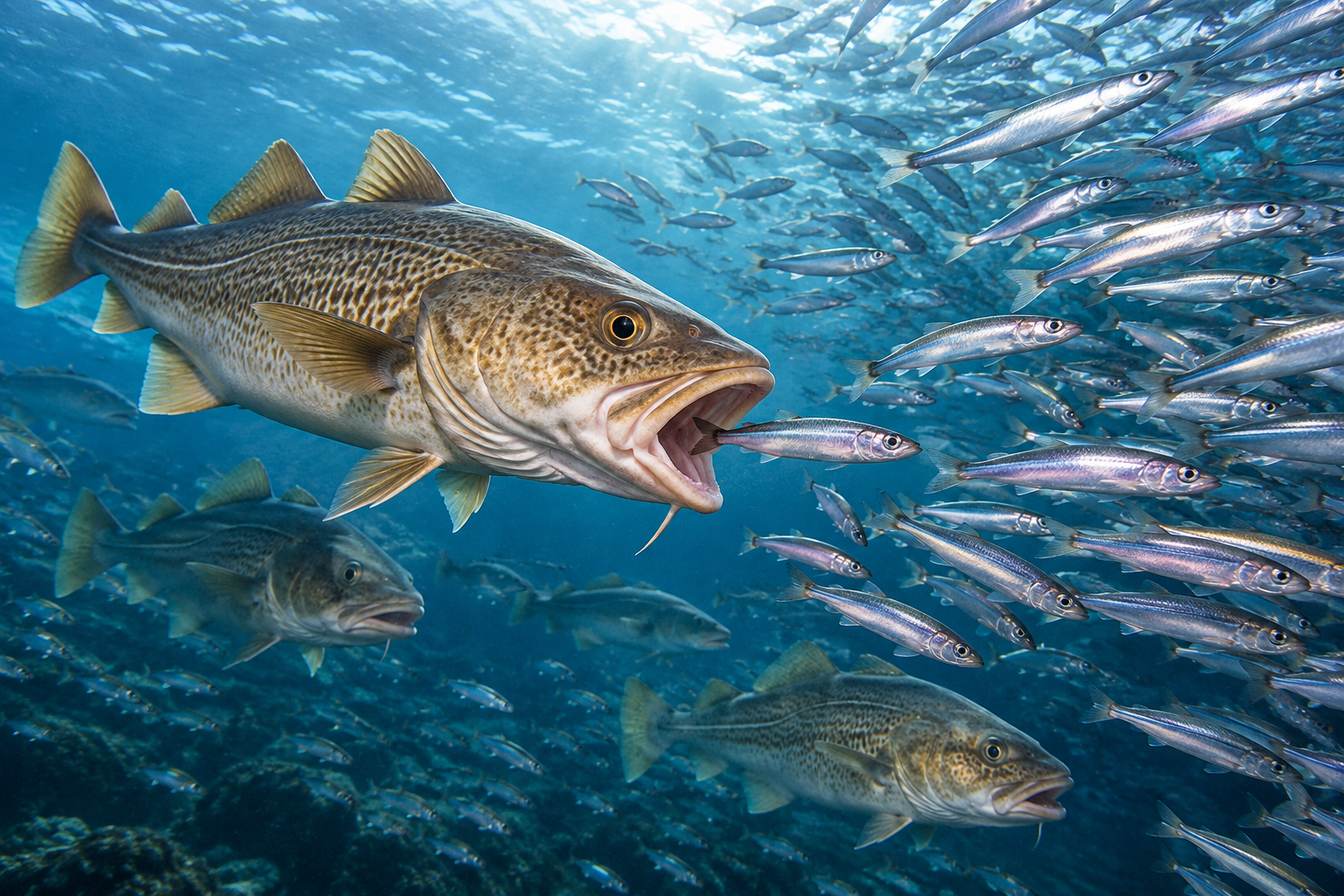
カペリンはタラの主要な餌であり、カペリンの資源量は、それを捕食するタラの資源量によっても左右される。このため、カペリンの漁獲勧告では、タラによる捕食の影響も考慮されている。
一方、タラの漁獲管理規則では、2013年ごろのように資源量が非常に大きくなった場合、最大の持続的漁獲量をもたらす水準よりも漁獲圧を最大約50%高める仕組みが採用されている。
これは、タラ資源が過度に増加することによって、餌となる他の水産資源に大きな影響を及ぼすことを防ぐためである。
HIによると、タラ資源全体の年間捕食量は最大で約1,000万トンに達し、その多くをカペリンやエビなど、商業的にも重要な水産資源が占めている。
気候変動によって海洋の食物網が変化し、新たな魚種が出現する状況では、こうした複数魚種資源管理が一層重要になると考えられている。
『大量漁獲から資源の有効利用へ』
Kvamstø所長は、過去の豊富な資源量への回帰を期待するのではなく、現在存在する限られた資源を適切に利用することが重要だと強調した。
そのためには、適切な海域で適切な個体を漁獲するとともに、水揚げした原料を無駄なく利用する必要があるという。
また、急速かつ複雑に変化する海洋環境に対応するためには、個々の魚種だけでなく、生態系全体を対象とした研究が不可欠であると指摘した。
Kvamstø所長は「従来の常識が崩れつつある」と述べ、HIは今後も科学的知見の蓄積を進め、これまで以上に大きくなっている不確実性を考慮した資源管理の助言を行わなければならないと締めくくった。
出典:Havforskningsinstituttet(ノルウェー海洋研究所)
2026年10月14日
原題:Havforskingsdirektøren: – Gamle sanningar står for fall
https://www.hi.no/hi/nyheter/2026/oktober/havforskingsdirektoren–gamle-sanningar-star-for-fall
In the mid-2000s, Norwegian waters supported abundant stocks of Northeast Arctic cod, including spawning migratory cod known as skrei. However, a return to those exceptionally productive years is unlikely in the near future.
Kvamstø emphasized that fisheries management must shift its focus from catching as much fish as possible to harvesting marine resources as effectively and responsibly as possible.
He also called for greater flexibility in fisheries policies and management systems to respond more quickly to accelerating environmental changes and to provide greater long-term predictability for the fishing industry.
Fishery Resources in Norwegian Waters Have Halved Since 2013
According to HI’s Resource Overview 2026, the combined fishery resources in Norwegian waters have declined by approximately 50% compared with their peak in 2013.
Northeast Arctic cod stocks, in particular, have experienced poor recruitment of young fish over the past two decades, a development whose underlying causes have remained difficult to explain.
However, recent scientific findings suggest that climate change, including rising ocean temperatures and their associated ecological effects, may be one of the main drivers behind this prolonged decline in recruitment.
Kvamstø stressed that as changes in marine ecosystems accelerate, fisheries policies and resource management systems must become more adaptable and capable of responding rapidly.
Incorporating Climate Uncertainty into Fishing Quotas
Geir Huse, Research Director at HI, warned that climate change and the associated physical, chemical, and oceanographic processes could fundamentally alter the ecological conditions affecting fish populations in Norwegian waters.
He argued that increasing uncertainty should be accompanied by larger precautionary margins in fisheries management to strengthen the resilience of fish stocks.
One possible measure would be to introduce additional safety margins when setting fishing quotas, reflecting uncertainty about how climate change may affect fish reproduction and recruitment.
Huse also emphasized that minimum legal catch sizes should be determined primarily by biological considerations rather than compromises between fisheries authorities and the fishing industry.
Allowing fish to grow sufficiently large to reproduce before being harvested would help support the long-term sustainability of fish populations.
Managing Capelin and Cod as Interconnected Resources
HI highlighted the growing importance of multispecies fisheries management, which considers ecological interactions among different fish populations rather than managing each species independently.
This approach has already been incorporated into capelin management.
Capelin is a major prey species for cod, and the abundance of capelin is strongly influenced by the number of cod feeding on it. Consequently, scientific advice on capelin catches already takes cod predation into account.
Cod management also incorporates ecological considerations.
Under the existing harvest control rule for cod, when the stock becomes exceptionally large, as it did around 2013, fishing pressure can increase to a level approximately 50% higher than that associated with maximum sustainable yield.
This mechanism is intended to prevent the cod population from becoming excessively large and placing additional pressure on other marine resources.
According to HI, the cod population can consume approximately 10 million metric tons of prey annually at its peak, much of which consists of commercially important species, including capelin and shrimp.
As climate change alters marine food webs and new species enter existing ecosystems, broader application of multispecies management could become an increasingly important tool for sustainable fisheries.
From Maximizing Catches to Making Better Use of Marine Resources
Kvamstø emphasized that fisheries management should no longer be based on expectations of returning to historically high stock levels.
Instead, the fishing industry must learn to operate sustainably within the limits of currently available marine resources.
This requires greater attention to which fish are harvested, where fishing takes place, and how effectively the entire catch is utilized.
He stressed that the industry can no longer afford to waste valuable marine resources.
Rapid and complex environmental changes also require marine research to adopt a more comprehensive ecosystem-based approach rather than focusing exclusively on individual fish stocks.
Kvamstø concluded that long-established assumptions about marine resources are increasingly being challenged.
He emphasized that HI must continue developing scientific knowledge, provide advice based on the best available evidence, and recognize that uncertainty surrounding marine ecosystems is now greater than ever before.
Source: Norwegian Institute of Marine Research (Havforskningsinstituttet)
Published: October 14, 2026
Original article: Havforskingsdirektøren: – Gamle sanningar står for fall
https://www.hi.no/hi/nyheter/2026/oktober/havforskingsdirektoren–gamle-sanningar-star-for-fall