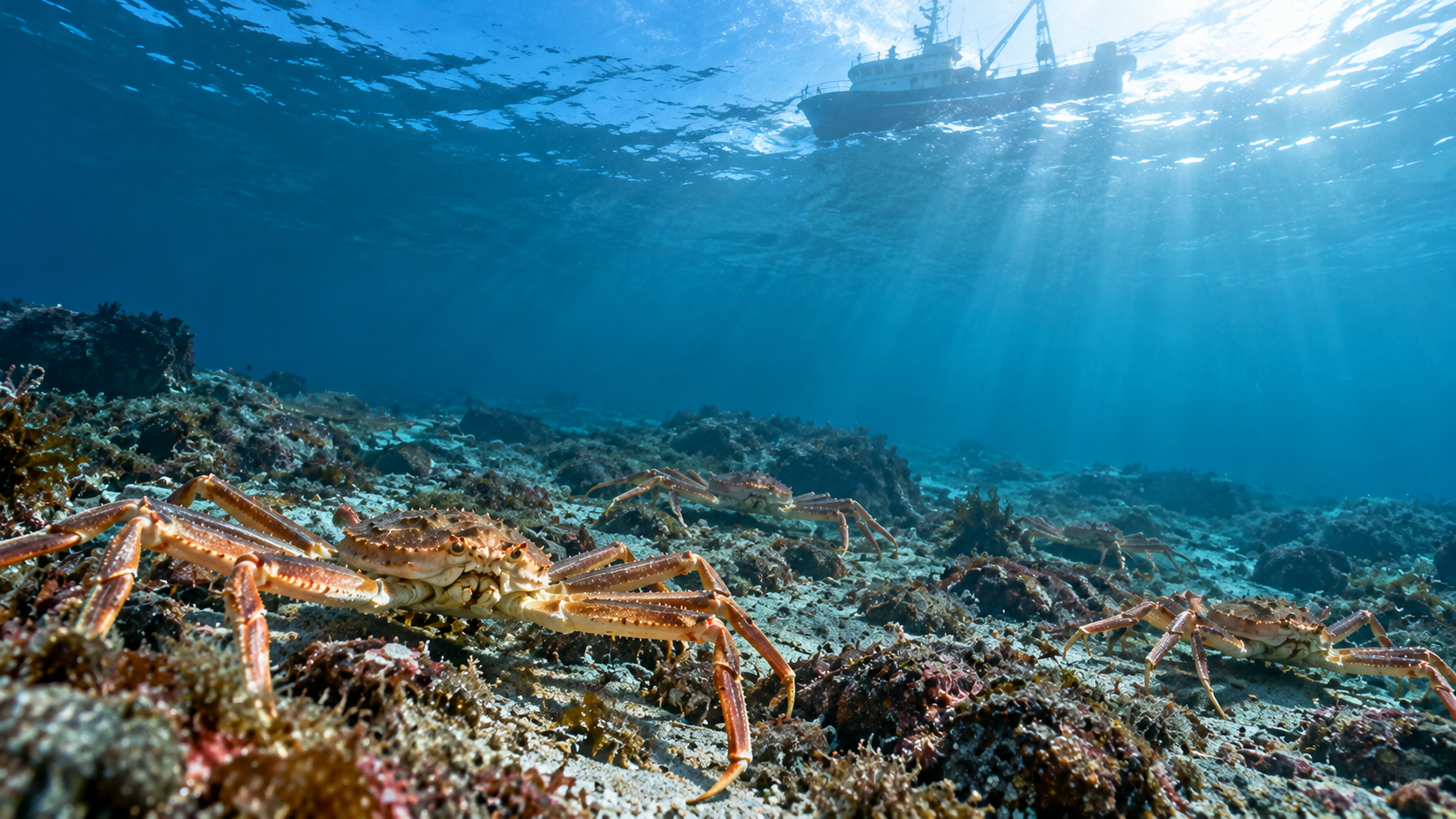
バレンツ海のズワイガニ資源が増加傾向―2027年の漁獲勧告量は前年比35%増の16,594トン
Barents Sea Snow Crab Stock Increasing – 2027 Catch Advice Raised by 35% to 16,594 Tonnes
ノルウェー海洋研究所(Havforskningsinstituttet:HI)は、バレンツ海のノルウェー大陸棚における2027年のズワイガニ漁獲勧告量を16,594トンと発表した。2026年の12,336トンから35%の引き上げとなる。
今回の勧告は、2026年の資源調査で各種指標が前年を上回り、ズワイガニ資源の増加傾向が確認されたことに基づいている。
『資源バイオマスは増加傾向を維持』
HIが公表した技術報告書「Rapport fra havforskningen 2026-54」によると、最大持続生産量(MSY)に対応する資源量を1とした相対資源バイオマス(B/B_MSY)は、2025年の1.60から2026年には1.70へ上昇し、2027年には1.78に達すると予測されている。
また、漁獲死亡率は持続可能な水準を下回り、漁獲可能な資源量も管理基準値を上回っている。
ノルウェー大陸棚のズワイガニ総漁獲量は、2017年の3,101トンから2025年には13,415トンまで増加しており、漁業規模の拡大が続いている。
『資源評価には依然として不確実性』
一方、HIは資源評価の不確実性も指摘している。
バレンツ海のズワイガニは全体として一つの資源集団と考えられているが、現在の評価モデルはノルウェー大陸棚に分布する部分資源のみを対象としている。
ロシア側との個体移動が資源量に与える影響は十分に解明されておらず、資源の生産力を過大評価する可能性がある。また、漁獲後の投棄による死亡が勧告量の算定に含まれていない点も課題となっている。
『2027年も7月から12月の禁漁を勧告』
HIは、脱皮期のズワイガニを保護し、漁獲時の損傷や品質低下を防ぐため、7月1日から12月31日までの禁漁期間を2027年も継続するよう勧告している。
今回の16,594トンは科学的な漁獲勧告量であり、正式な漁獲枠ではない。最終的な漁獲枠はノルウェー政府が決定する。
資源指標の改善によって2027年の漁獲拡大が見込まれる一方、今後の安定供給を判断する上では、資源評価の精度と最終的な漁獲枠の設定が引き続き重要となる。
『出典』
Havforskningsinstituttet(HI)、2026年10月19日
ニュース記事:
https://www.hi.no/hi/nyheter/2026/oktober/snokrabbe-solid-okning-i-kvoteradet
技術報告書:Rapport fra havforskningen 2026-54
https://www.hi.no/hi/nettrapporter/rapport-fra-havforskningen-2026-54
The Norwegian Institute of Marine Research (Havforskningsinstituttet: HI) has announced a recommended catch limit of 16,594 tonnes for snow crab on the Norwegian continental shelf in the Barents Sea in 2027. This represents a 35% increase from the 2026 level of 12,336 tonnes.
The higher recommendation is based on the results of the 2026 stock assessment, which showed improvements in all stock indicators compared with the previous year, indicating an increasing trend in snow crab abundance.
『Stock Biomass Continues to Increase』
According to HI’s technical report, Rapport fra havforskningen 2026-54, relative stock biomass (B/B_MSY), where the biomass corresponding to maximum sustainable yield (MSY) is set at 1, increased from 1.60 in 2025 to 1.70 in 2026 and is projected to reach 1.78 in 2027.
Fishing mortality remains below the level associated with MSY, while exploitable stock biomass is above the relevant management reference points.
Total snow crab catches on the Norwegian continental shelf have also increased substantially, from 3,101 tonnes in 2017 to 13,415 tonnes in 2025, reflecting the continued expansion of the fishery.
『Uncertainties Remain in the Stock Assessment』
However, HI also highlights several uncertainties in the stock assessment.
Although snow crab in the Barents Sea is considered to constitute a single stock, the current assessment model covers only the portion distributed on the Norwegian continental shelf.
The effects of crab movements between the Russian and Norwegian continental shelves are not yet fully understood, potentially leading to an overestimation of stock productivity.
Another concern is that mortality resulting from discarded crabs is not included in the calculation of the catch advice.
『Closed Season from July to December Recommended for 2027』
HI recommends maintaining the closed fishing season from July 1 to December 31 in 2027 to protect snow crabs during their moulting period and reduce handling damage and deterioration in product quality.
The recommended catch of 16,594 tonnes represents scientific advice rather than a final official quota. The final catch quota will be determined by the Norwegian government.
While improving stock indicators suggest opportunities for increased catches in 2027, the reliability of future supply will continue to depend on the accuracy of stock assessments and the final quota decisions.
『Sources』
Havforskningsinstituttet (HI), October 19, 2026
News article:
https://www.hi.no/hi/nyheter/2026/oktober/snokrabbe-solid-okning-i-kvoteradet
Technical report: Rapport fra havforskningen 2026-54
https://www.hi.no/hi/nettrapporter/rapport-fra-havforskningen-2026-54