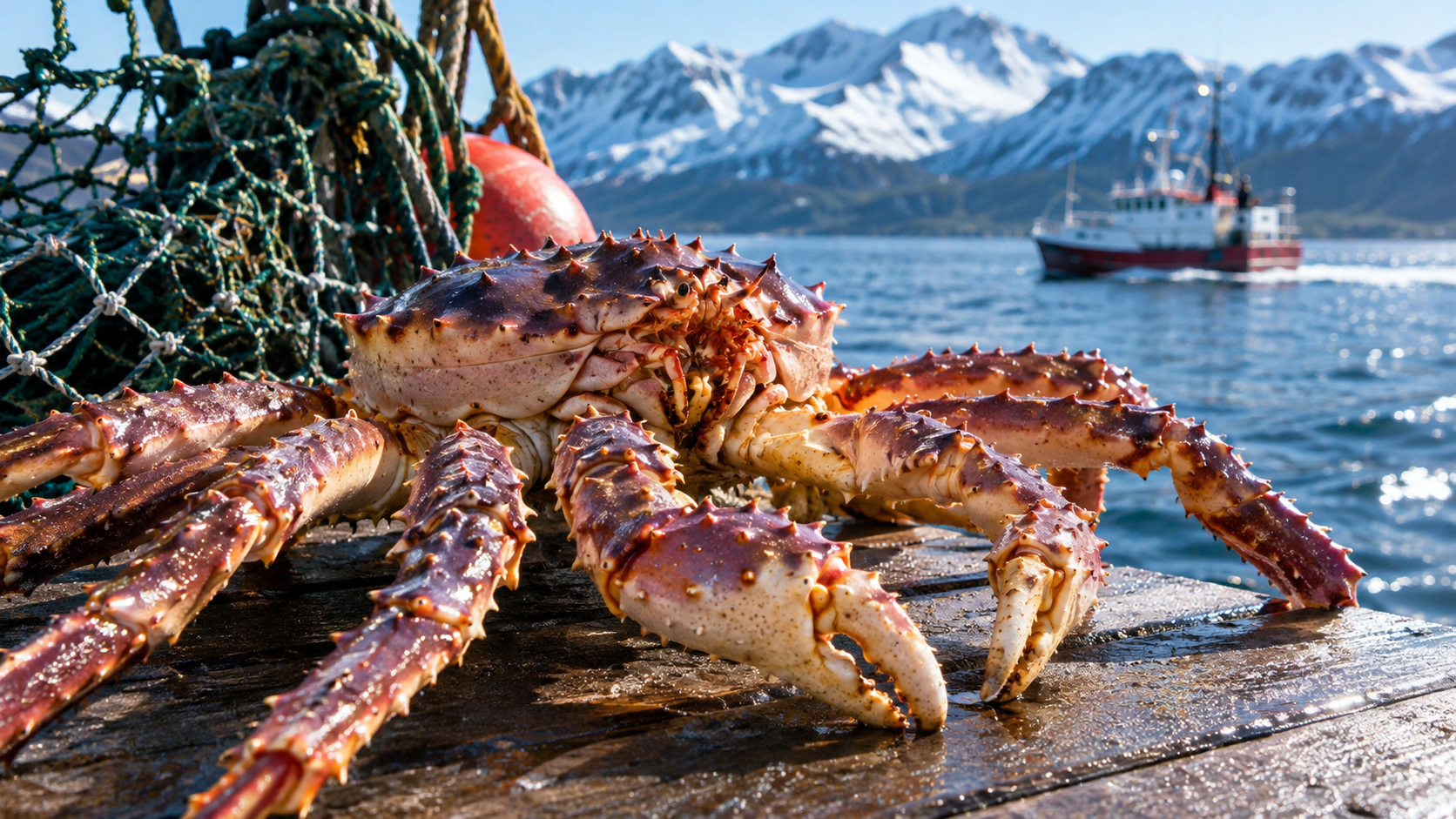
ノルウェー、2027年のタラバガニ漁獲勧告量をほぼ倍増
Norway Nearly Doubles King Crab Catch Advice for 2027
『2026年の漁獲制限が資源回復に寄与』
同研究所によると、2026年は漁獲枠を低く設定したことで資源への漁獲圧力が軽減され、漁獲可能な雄ガニの資源量が増加した。
資源評価を担当するAnn Merete Hjelset研究員は、今回の評価結果から2027年には漁獲量を増やす余地があるとの見解を示している。
なお、今回発表された1,690トンは科学的な漁獲勧告量であり、政府が最終的に設定する漁獲枠(TAC)とは異なる。2026年についても、勧告量850トンに対し、実際の設定枠は930トンとなっていた。
『資源管理区域外では引き続き自由操業を推奨』
ノルウェーのタラバガニは、1960年代にロシアの研究者がMurmansk-fjordenなどに放流した個体が、その後西方へ分布を拡大した外来種である。
このため、ノルウェーでは地域によって異なる資源管理方針が採用されている。
Øst-Finnmarkの漁獲枠管理区域では、長期的に安定した商業漁業の維持を目指す一方、Nordkapp以西では生息密度を可能な限り低く抑え、さらなる分布拡大を防ぐことを目的としている。
HIは今回、漁獲枠管理区域外での自由操業を引き続き認めるよう勧告した。
『脱皮・繁殖期の禁漁措置も継続へ』
HIは漁獲勧告量の引き上げと同時に、春季の禁漁措置についても継続・拡大を提案している。
2026年には、漁獲枠管理区域内で3月から5月までの3か月間が禁漁期間に設定された。春は雄と雌が浅い海域に集まり、脱皮や繁殖を行う重要な時期に当たる。
脱皮中のカニは特に傷つきやすく、漁獲時の取り扱いによる損傷が品質低下につながる可能性がある。
同研究所は、こうした時期の漁獲を制限することで、資源の生産力を維持するとともに、漁獲物の品質確保や漁業経営の安定化にもつながると説明している。
『今後の漁獲枠決定と供給動向に注目』
今回の勧告量は前年から大幅に増加したものの、資源が完全に回復したことを意味するものではない。HIの資源評価では、漁獲可能な資源量は依然として最大持続生産量(MSY)に対応する資源水準を下回っている。
また、2027年の実際の漁獲枠については、今後ノルウェー政府が決定することになる。
仮に勧告に沿った増枠が実施されれば、ノルウェー産タラバガニの供給量増加につながる可能性がある。ただし、実際の供給量や価格への影響については、最終的な漁獲枠や操業状況、国際市場の需要動向を見極める必要がある。
出典:ノルウェー海洋研究所(Havforskningsinstituttet / HI)
2026年11月2日付
「Dobler kvoterådet for kongekrabbe i 2027」
https://www.hi.no/hi/nyheter/2026/november/dobler-kvoteradet-for-kongekrabbe-i-2027
参考資料:HI「Råd om fiske av kongekrabbe i 2027」
https://www.hi.no/hi/nettrapporter/rapport-fra-havforskningen-2026-60
The increase reflects a recovery in the harvestable stock, mainly due to reduced fishing pressure under the lower catch quota in 2026.
Lower Catch Quota in 2026 Helped Stock Recovery
According to IMR, the low catch quota in 2026 reduced fishing mortality and contributed to an increase in the harvestable male crab stock.
Ann Merete Hjelset, the researcher responsible for the stock assessment, stated that the improved stock condition could allow a higher catch quota in 2027.
However, the recommended 1,690 tonnes is scientific advice, not the final Total Allowable Catch (TAC), which will be determined by the Norwegian authorities.
Free Fishing Recommended Outside the Quota-Regulated Area
King crab was introduced into the Murmansk Fjord and surrounding areas by Russian scientists in the 1960s. Since then, the species has spread westward into Norwegian waters.
As king crab is not native to Norway, the country applies two different management approaches.
In East Finnmark, the objective is to maintain a profitable and sustainable fishery over the long term. West of Nordkapp, the aim is to keep the crab population as low as possible to limit further expansion.
IMR therefore recommends continuing unrestricted fishing outside the quota-regulated area.
Extended Fishing Closure During the Moulting Season
IMR also recommends maintaining and extending the seasonal fishing closure introduced in 2026.
In 2026, fishing in the quota-regulated area was prohibited from March through May, when male and female crabs gather in shallow waters for moulting and reproduction.
Crabs are particularly vulnerable during moulting, and handling them during fishing operations can cause damage and reduce product quality.
IMR believes that protecting crabs during this period will help maintain a productive stock, improve crab quality, and support the long-term profitability of the fishery.
Outlook for 2027 Supply
Although the recommended catch has nearly doubled, this does not mean that the king crab stock has fully recovered. According to IMR’s stock assessment, the harvestable stock remains below the level associated with maximum sustainable yield (MSY).
The final catch quota for 2027 has yet to be decided by the Norwegian government.
If the recommended increase is adopted, Norwegian king crab supplies could rise in 2027. However, the actual impact on supply and market prices will depend on the final quota, fishing conditions, and international demand.
Source: Norwegian Institute of Marine Research (Havforskningsinstituttet / IMR)
Published: November 2, 2026
” Dobler kvoterådet for kongekrabbe i 2027 ”
https://www.hi.no/hi/nyheter/2026/november/dobler-kvoteradet-for-kongekrabbe-i-2027
Reference: IMR, “Råd om fiske av kongekrabbe i 2027”
https://www.hi.no/hi/nettrapporter/rapport-fra-havforskningen-2026-60