アイスランドのカペリン資源調査開始、今季は小規模の可能性
Iceland Launches Capelin Resource Survey, Small-Scale Season Likely
報道によると、アイスランド海洋研究所(Hafrannsóknastofnun)の調査船「Árni Friðriksson」が、2026年のカペリン資源調査のために出航した。今回の調査は、カペリンがどこまでアイスランドの排他的経済水域に入り込んでいるのか、あるいは氷の下に留まっているのかを確認することを目的としている。
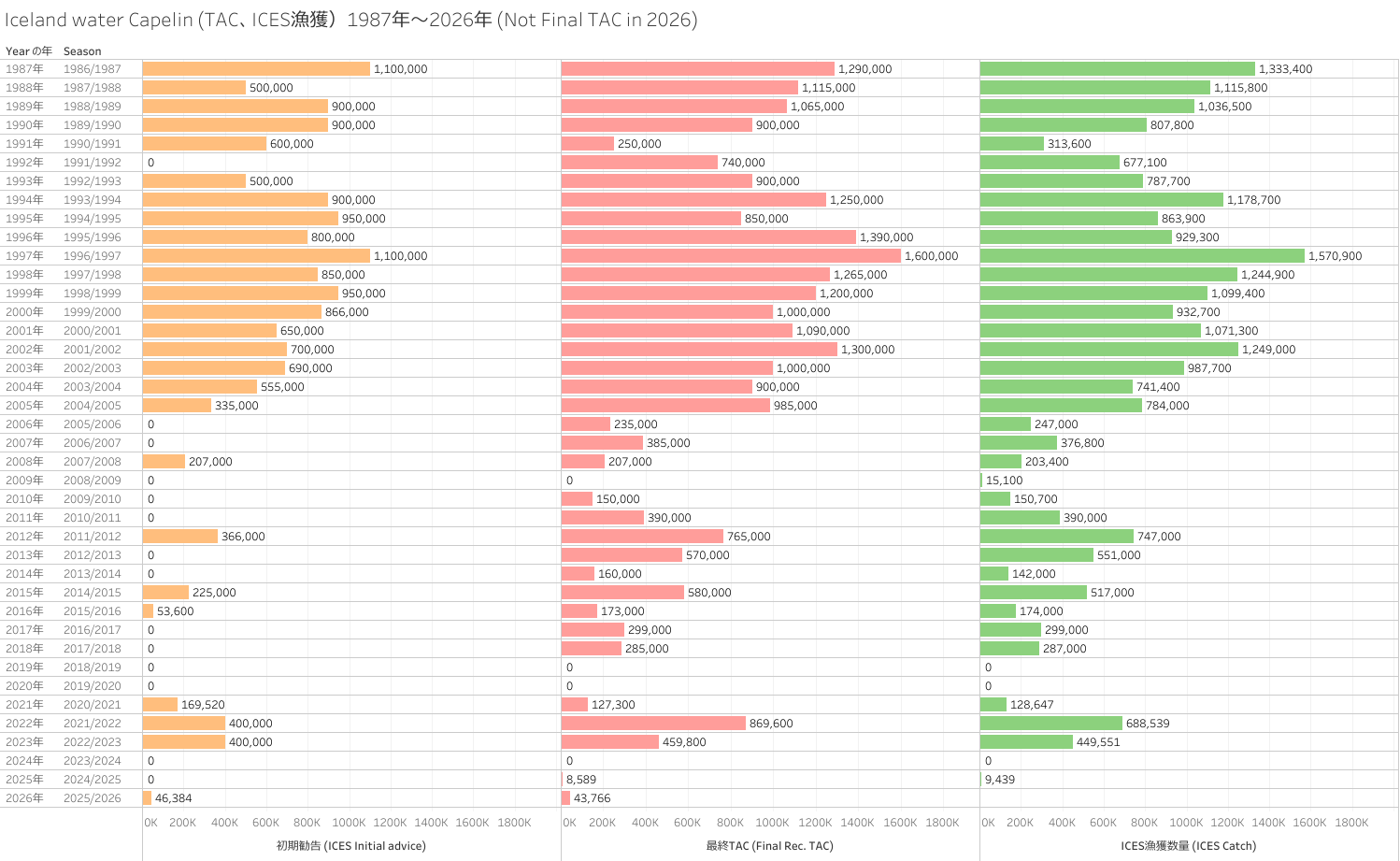
現時点の調査結果や過去のデータから、今季のカペリン漁は歴史的に見て非常に小規模になる可能性が高いとされている。2025年秋の資源評価では、約4万4千トンの漁獲が推奨されており、前年よりは増加しているものの、長期的に見れば依然として低い水準にとどまる。追加調査によって漁獲枠が増える可能性はあるが、大幅な上方修正は期待しにくいという。
一方で、2024年に産卵された次世代のカペリンは比較的大きな年級群になると見られており、2026/27漁期に向けては前向きな見通しが示されている。この年級群は、2021年から2023年にかけて豊漁をもたらした2019年級群に匹敵する規模とされる。
カペリン漁は短期間で大きな経済価値を生み、特に魚卵は高値で取引される。一方で、漁獲量が増えると魚粉・魚油向けの比率が高まり、単価が下がるという側面もある。
研究者は、カペリンの資源評価には大きな不確実性が伴うと強調している。特に、卵から1歳までの初期成長段階についての知見が乏しく、この期間がいわば「ブラックボックス」となっている点が課題とされている。また、近年増加しているクジラ、特にザトウクジラによる捕食が資源に与える影響についても、十分なデータがなく、今後の調査が必要とされている。
さらに、2000年代以降の海水温の上昇により、カペリンの分布がアイスランド周辺からグリーンランド寄りへ変化し、大規模な年級群が生まれにくくなった可能性も指摘されている。
総じて、今季は厳しい状況が見込まれるものの、来季以降には一定の期待が持たれている。一方で、資源管理の基盤となる科学的知識、とりわけ若齢期や生態系全体との関係については、さらなる研究投資が不可欠だと結論づけられている。
(出典:RÚV
https://www.ruv.is/frettir/innlent/2026-01-05-brellinn-fiskur-heldur-utgerdum-vid-efnid-462948)
According to media reports, the research vessel Árni Friðriksson of Iceland’s Marine and Freshwater Research Institute (Hafrannsóknastofnun) has departed on a survey to assess capelin resources for the 2026 season. The purpose of the survey is to determine how far capelin have migrated into Iceland’s exclusive economic zone, or whether they remain under the ice.
Based on current survey results and past data, the capelin fishery this season is expected to be historically small. In the stock assessment conducted in autumn 2025, the recommended catch level was approximately 44,000 tons. While this represents an increase from the previous year, it remains low from a long-term perspective. Although additional surveys could lead to some adjustment in catch limits, a significant upward revision is considered unlikely.
On the other hand, the year class spawned in 2024 is regarded as relatively strong, supporting a more optimistic outlook for the 2026/27 fishing season. This year class is considered comparable in size to the 2019 year class, which supported strong catches between 2021 and 2023.
Capelin fishing generates substantial economic value within a short period, particularly through roe production, which commands high prices. However, when catches increase, a larger share is processed into fishmeal and fish oil, which tends to lower average unit prices.
Researchers emphasize that significant uncertainty remains in capelin stock assessments. In particular, knowledge of the early life stages—from eggs to one year of age—is limited, making this period something of a “black box.” In addition, there is insufficient data on the impact of increased whale predation, especially by humpback whales, on capelin stocks, highlighting the need for further research.
Furthermore, rising sea temperatures since the early 2000s are believed to have altered capelin distribution, shifting it away from Icelandic waters toward Greenland. This change may have contributed to the reduced occurrence of large year classes.
Overall, while the outlook for the current season appears challenging, there is cautious optimism for future seasons. At the same time, the article concludes that further investment in scientific research—particularly on early life stages and broader ecosystem interactions—is essential for effective resource management.
Source: RÚV
https://www.ruv.is/frettir/innlent/2026-01-05-brellinn-fiskur-heldur-utgerdum-vid-efnid-462948