ノルウェーとロシア、2027年バレンツ海漁業協定で合意―タラ漁獲枠は14%増加、カペリンは3年連続で禁漁
Norway and Russia Agree on 2027 Barents Sea Fisheries Agreement – Cod Quota Increases by 14%, While Capelin Fishing Remains Closed for Third Consecutive Year
2026年10月23日
ノルウェーとロシアは2026年10月23日、トルコのIstanbulで2027年のバレンツ海における漁業協定に合意した。交渉は10月19日から23日まで行われ、両国が対面形式で協議するのは2019年以来となった。
今回の協定では、タラ、ハドック、カラスガレイ、アカウオ、カペリンなど、両国が共同管理する主要魚種の漁獲枠が決定された。
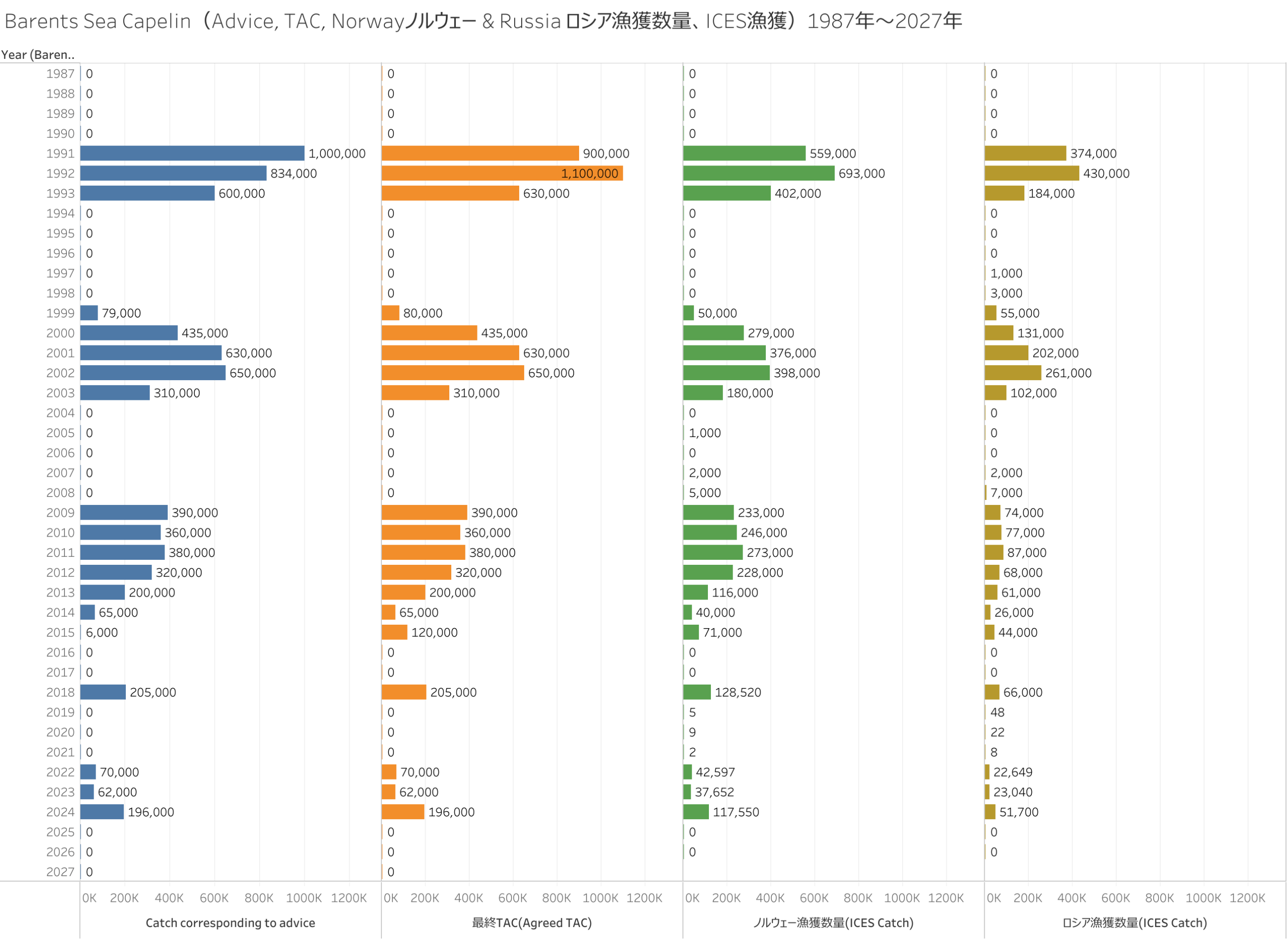
タラの漁獲枠が6年ぶりに増加へ転じた一方、カペリンについては2027年も禁漁が継続され、3年連続で漁獲枠がゼロとなった。
『2027年の魚種別漁獲枠』
今回合意された2027年の総漁獲可能量(TAC)は以下の通り。
| 魚種 | 2027年TAC | 2026年比 |
|---|---|---|
| タラ(北東北極海系群) | 325,000トン | 14%増 |
| ハドック | 180,336トン | 18%増 |
| カラスガレイ | 21,000トン | 11%増 |
| アカウオ | 67,090トン | 3%減 |
| カペリン | 0トン | 禁漁継続 |
『タラ漁獲枠は6年ぶりの増加』
2027年の北東北極海タラの総漁獲枠は325,000トンに設定され、2026年比14%の増加となった。
バレンツ海のタラ漁獲枠が増加するのは6年ぶりとなる。近年は資源状況の悪化により漁獲枠の削減が続いていたが、今回の増加は資源回復の兆しを示すものとなった。
ノルウェー政府によれば、今回の漁獲枠はタラ資源の継続的な回復を促す水準に設定されている。
また、ハドックは前年比18%増の180,336トン、カラスガレイは11%増の21,000トンとなった。一方、アカウオは3%減の67,090トンに設定された。
『カペリンは3年連続で禁漁』
今回の協定で特に注目されるのが、バレンツ海のカペリン漁業について、2027年も禁漁が継続されることだ。
これにより、2025年から2027年まで3年連続で商業漁獲が認められないこととなった。
ノルウェーとロシアが採用するカペリンの資源管理規則では、少なくとも200,000トンのカペリンが95%の確率で産卵できるように、総漁獲可能量(TAC)を設定することが求められている。
この200,000トンは、資源管理上の限界値(Blim)に相当する。
今回の禁漁継続は、産卵親魚の資源量を確保し、カペリン資源の回復を図るための措置となる。
なお、今回の禁漁措置はノルウェーとロシアが共同管理するバレンツ海のカペリン資源を対象としたものであり、アイスランド周辺海域のカペリン資源とは別に管理されている。
したがって、今回の決定がアイスランドのカペリン漁獲枠に直接影響するものではない。
『ノルウェーとロシア、共同資源管理を継続』
今回の交渉では、ロシアの船会社2社に対する制裁措置などが影響し、協議は難航した。
しかし、両国は2027年の漁獲枠について合意するとともに、共同科学研究プログラムや技術的な漁業規制措置を継続することでも一致した。
さらに、タラとハドックの資源管理規則については、今後5年間延長することが決定された。
ノルウェーとロシアは過去50年間にわたり、バレンツ海の水産資源を共同管理してきた。今回の合意により、両国による資源管理体制は2027年も維持されることとなった。
『まとめ』
2027年のバレンツ海漁業協定では、タラの漁獲枠が6年ぶりに増加するなど、一部魚種で資源回復の兆しが見られた。
一方、カペリンについては3年連続で禁漁が決定され、依然として厳しい資源状況が続いている。
バレンツ海のカペリンは北大西洋の重要な水産資源の一つであり、今後の資源調査結果や2028年以降の漁獲再開の可能性が注目される。
出典:ノルウェー政府(2026年10月23日)
Enighet om norsk-russisk fiskeriavtale for 2027(ノルウェー政府公式発表)
Norway and Russia reached an agreement on fisheries management in the Barents Sea for 2027 on October 23, 2026, in Istanbul, Turkey. Negotiations were held from October 19 to 23, marking the first in-person meeting between the two countries since 2019.
The agreement establishes fishing quotas for major jointly managed species, including cod, haddock, Greenland halibut, beaked redfish, and capelin.
While the cod quota will increase for the first time in six years, the capelin fishery will remain closed in 2027, marking the third consecutive year with a zero catch quota.
2027 Fishing Quotas by Species
The total allowable catches (TACs) agreed for 2027 are as follows:
| Species | 2027 TAC | Change from 2026 |
|---|---|---|
| Cod (Northeast Arctic stock) | 325,000 MT | +14% |
| Haddock | 180,336 MT | +18% |
| Greenland Halibut | 21,000 MT | +11% |
| Beaked Redfish | 67,090 MT | -3% |
| Capelin | 0 MT | Fishing ban continues |
Cod Quota Increases for the First Time in Six Years
The TAC for Northeast Arctic cod has been set at 325,000 MT for 2027, representing a 14% increase compared with 2026.
This marks the first increase in the Barents Sea cod quota in six years. In recent years, quotas have been repeatedly reduced due to deteriorating stock conditions, but the latest increase indicates early signs of stock recovery.
According to the Norwegian government, the 2027 quota has been set at a level intended to support the continued rebuilding of the cod stock.
The haddock quota will also increase by 18% to 180,336 MT, while the Greenland halibut quota will rise by 11% to 21,000 MT. Meanwhile, the beaked redfish quota will decrease by 3% to 67,090 MT.
Capelin Fishing Remains Closed for Third Consecutive Year
One of the most significant points of the agreement is the continued closure of the Barents Sea capelin fishery in 2027.
As a result, commercial capelin fishing will remain prohibited for three consecutive years, from 2025 through 2027.
Under the capelin management rule adopted by Norway and Russia, the total allowable catch (TAC) must be set at a level that ensures at least 200,000 MT of capelin have a 95% probability of surviving to spawn.
This 200,000 MT threshold corresponds to Blim, the biomass limit reference point used in stock management.
The continued fishing ban is intended to protect the spawning stock and support the recovery of capelin resources.
It should be noted that this fishing ban applies specifically to the Barents Sea capelin stock, which is jointly managed by Norway and Russia.
The Icelandic capelin stock is managed separately, and therefore the decision does not directly affect capelin fishing quotas in Icelandic waters.
Norway and Russia Continue Joint Fisheries Management
Negotiations were challenging, partly due to sanctions imposed on two Russian fishing companies.
Nevertheless, the two countries reached an agreement on fishing quotas for 2027 and agreed to continue their joint scientific research program and technical fisheries regulations.
In addition, the management rules for cod and haddock will be extended for another five years.
Norway and Russia have cooperated in managing shared fish stocks in the Barents Sea for the past 50 years. The latest agreement ensures that their joint fisheries management framework will remain in place in 2027.
Summary
Under the 2027 Barents Sea fisheries agreement, the cod quota will increase for the first time in six years, indicating early signs of recovery in certain fish stocks.
However, the capelin fishery will remain closed for the third consecutive year, reflecting the continued challenging condition of the stock.
Capelin is an important marine resource in the North Atlantic, and future stock assessment results and the possibility of reopening the fishery in 2028 or beyond will be closely watched.
Source: Norwegian Government (October 23, 2026)
Enighet om norsk-russisk fiskeriavtale for 2027 – Official Norwegian Government Press Release