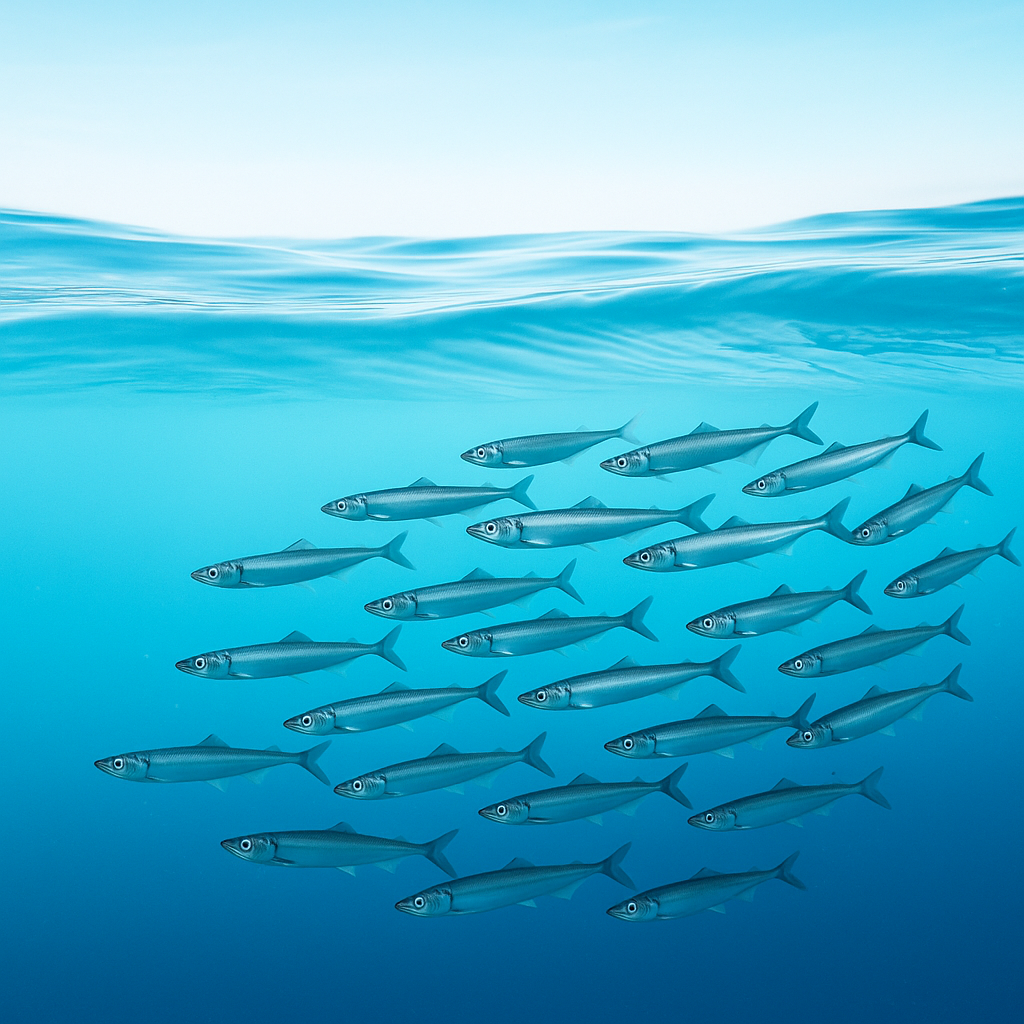
バレンツ海のカペリンは今年も低水準―ノルウェー海洋研究所が最新調査結果を発表
Barents Sea Capelin Remains at Low Levels — Institute of Marine Research Releases Latest Survey Results
今朝、ノルウェーの公共放送NRKが報じたバレンツ海のカペリンに関するニュースを紹介したが、その情報源となったHI(ノルウェー海洋研究所)から10月5日、今回の生態系調査について正式な発表があった。
HIによると、バレンツ海で実施している2026年の生態系調査は終盤に入り、ノルウェー側におけるカペリンの主要な摂餌海域の調査はほぼ完了した。
調査船「Johan Hjort」はバレンツ海最北部の調査を終え、「Helmer Hansen」も担当海域の調査を終えようとしている。
その結果、昨年に続き、今年も確認されたカペリンの量は少なかった。特に、通常カペリンが多く確認される主要摂餌海域のStorbanken北部でも、確認量は低水準だった。
また、東部の摂餌海域を調査しているロシア側からも、カペリンは少量しか確認されていないとの報告が入っている。
HIは、カペリンの加入がここ数年間低調な状態にあると説明している。その要因の一つとして、近年バレンツ海に大量に分布しているノルウェー春産卵ニシン(NVG-sild)の影響を指摘している。ニシンはカペリンと餌をめぐって競合するだけでなく、カペリンの仔魚を直接捕食するため、カペリンの加入に影響を与えている可能性がある。
さらに、カペリンはバレンツ海の生態系において重要な餌資源であり、特にタラとの関係が深い。HIによると、3~5歳のタラの体長と体重は2024年から2026年にかけて明らかに低下しており、カペリンが少ないことがその一因となっている可能性がある。
今回のHIの正式発表は、今朝紹介したNRKの報道内容を裏付けるものとなった。ノルウェー側だけでなく、ロシア側の調査海域でもカペリンが少ないと報告されている点を考えると、今後発表される2027年のバレンツ海カペリン漁に関する正式な勧告が注目される。
出典:HI(ノルウェー海洋研究所)
https://www.hi.no/hi/nyheter/2026/oktober/okosystemtoktet
Earlier today, we reported on news from Norwegian public broadcaster NRK regarding the capelin stock in the Barents Sea. On October 5, the Institute of Marine Research (HI), which was the original source of the information, officially released an update on its latest ecosystem survey.
According to HI, the 2026 ecosystem survey in the Barents Sea is now nearing completion, and the main feeding areas for capelin on the Norwegian side have largely been covered.
The research vessel “Johan Hjort” has just completed its survey of the northernmost parts of the Barents Sea, while “Helmer Hansen” is also close to completing its part of this year’s ecosystem survey.
The results show that, as in 2025, only modest amounts of capelin were observed this year. In particular, low levels of capelin were recorded in the northern part of Storbanken, one of the main feeding areas where capelin are normally abundant.
Russian scientists, who are surveying the eastern feeding areas, have also reported only small amounts of capelin.
HI noted that capelin recruitment has remained weak for several years. One possible factor is the large amount of Norwegian spring-spawning herring (NVG herring) present in the Barents Sea in recent years. In addition to competing with capelin for food, the herring feed directly on capelin larvae, which may be contributing to the weak recruitment.
Capelin is also a key prey species in the Barents Sea ecosystem, particularly for cod. According to HI, the length and weight of 3–5-year-old cod declined noticeably between 2024 and 2026, and the low abundance of capelin may be one of the contributing factors.
HI’s official announcement supports the NRK report released earlier today. With low levels of capelin being reported not only on the Norwegian side but also in the areas surveyed by Russia, attention will now turn to the forthcoming official recommendation for the 2027 Barents Sea capelin fishery.
Source: Institute of Marine Research (HI), Norway
https://www.hi.no/hi/nyheter/2026/oktober/okosystemtoktet