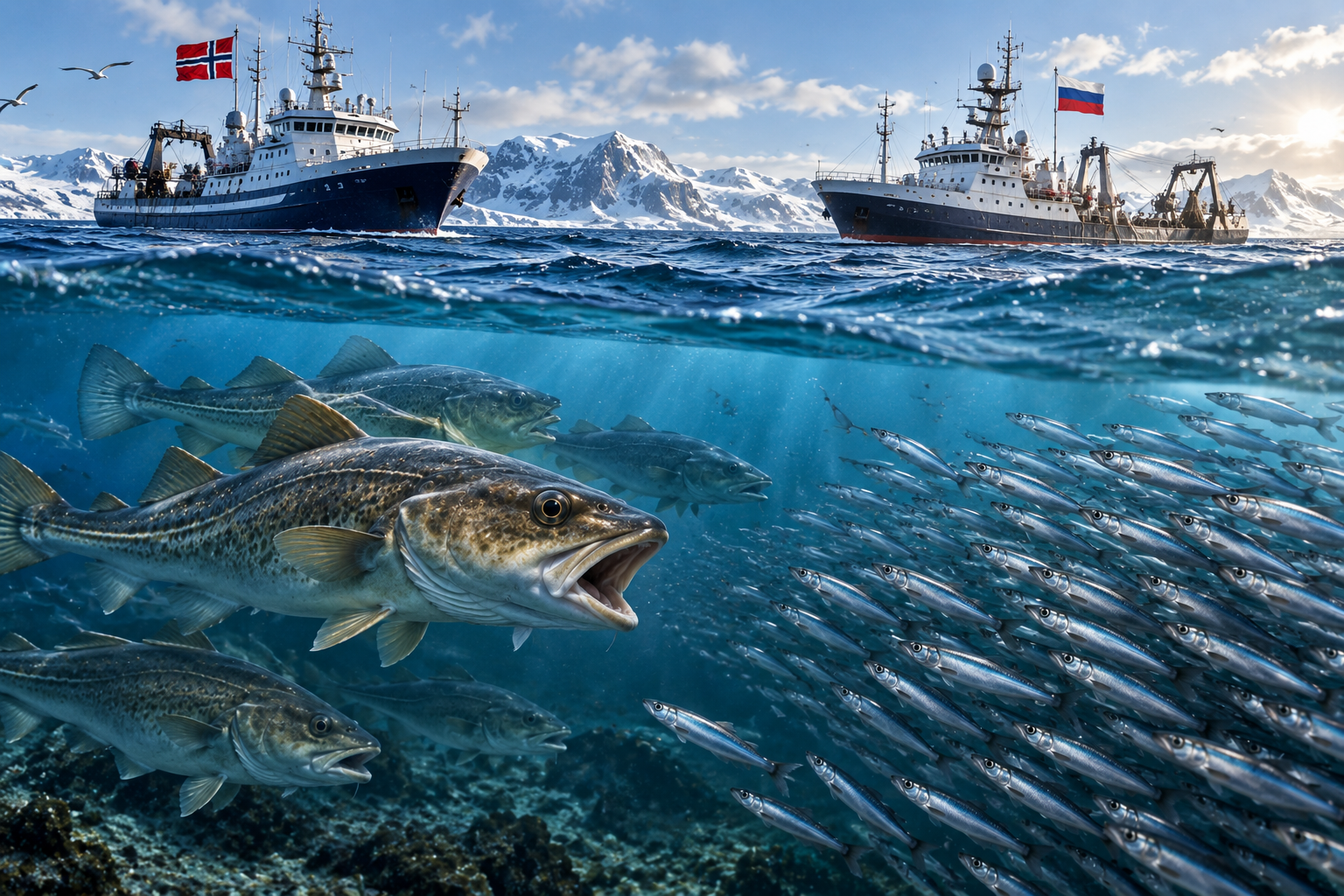
バレンツ海のタラ資源に回復の兆し 2027年TACは10%増の31.3万トンへ
Signs of Recovery in Barents Sea Cod Stock — 2027 TAC to Rise 10% to 313,000 Tonnes
ロシアの水産情報サイト「Fishery.ru」が9月17日に掲載した記事によると、2027年のバレンツ海におけるタラの総許容漁獲量(TAC)は、2026年の28万5,000トンから約10%増の31万3,000トンへ引き上げることが勧告された。
今回の引き上げは、ロシアとノルウェーの科学者による共同調査の結果を受けたものだ。
北部漁業者連合(СРС)のКонстантин Древетняк氏によると、増加幅そのものは大きくないものの、タラ資源が今後も増加していく可能性を示すシグナルとして捉えられるという。
今回のTAC増加の背景として注目されるのが、2021年級群である。
2021年級群の資源量は、それ以前の低調だった年級群を上回っており、この世代が漁獲対象資源へ加入することが、2027年のTAC引き上げにつながっている。
タラ以外の底魚についても、2027年は漁獲量の引き上げが勧告されている。
ハドックは2026年の15万3,000トンから18万トンへ17%増加。オヒョウについても、近年の約1万5,000トンから1万9,000トンへ引き上げられる。一方、赤魚は6万9,000トンから6万7,000トンへ若干減少する。
ただし、これらは科学的な勧告に基づく数字であり、バレンツ海における最終的な漁獲枠は、例年年末に開催されるロシア・ノルウェー合同漁業委員会によって決定・配分される。
2026年のバレンツ海におけるタラTACは28万5,000トンと、過去35年間で最低水準となった。このうちロシアの漁業者には12万トンが割り当てられている。
資源減少の要因として、バレンツ海やノルウェー海の海水温上昇、タラが利用できる餌資源の減少などが指摘されてきた。
また、ロシアの漁業者は燃料価格の高騰や制裁に伴う物流上の問題にも直面している。2026年には燃料価格がほぼ2倍に上昇し、1リットル当たり150ルーブルに達した。
さらに、ノルウェー側がロシア漁船によるベア島やスピッツベルゲン周辺での積み替えを禁止したことで、ロシア沿岸まで戻って積み替える必要が生じ、操業時間の減少につながっている。
こうした厳しい環境にあるものの、北部漁業者連合では、2026年のムルマンスクの漁業者によるタラ、ハドック、オヒョウ、赤魚など主要底魚類の漁獲枠消化率は約100%に達するとみている。
ニシンやサバなどの浮魚類についても、同様に漁獲枠はほぼ消化される見通しだ。ブルーホワイティングについては、価格が安く現在の環境では採算を取りにくいことから若干の未消化が予想されるものの、漁獲枠消化率は80%を超えるとみられている。
ムルマンスク州当局によると、同州の水産業への投資額は過去2年間でほぼ半減している。一方、ムルマンスクでは40億ルーブルを投じ、地元漁業者が漁獲した魚介類の保管設備を備えた大型物流ハブを建設する計画も進められている。
引用・参考:
Fishery.ru
「Мурманским рыбакам в 2027 году могут разрешить добыть больше трески」
2026年9月17日掲載
原記事:РБК Мурманск
https://fishery.ru/news?idnews=732605
英語ブログ用として、直訳調にならないように自然な業界英語にすると以下の形がよいと思います。
According to an article published by the Russian fisheries news site Fishery.ru on September 17, the total allowable catch (TAC) for cod in the Barents Sea in 2027 has been recommended at 313,000 tonnes, up approximately 10% from 285,000 tonnes in 2026.
The recommended increase is based on the results of joint research conducted by Russian and Norwegian scientists.
According to Konstantin Drevetnyak, Director General of the Northern Fisheries Union, the increase itself is relatively modest, but the fact that the TAC is moving upward can be seen as a positive signal that the cod stock may continue to grow.
One of the key factors behind the higher TAC recommendation is the 2021 year class.
The abundance of the 2021 year class is estimated to be higher than that of the relatively weak year classes of previous years. As this year class enters the exploitable stock, it is contributing to the higher TAC recommendation for 2027.
Higher catch limits have also been recommended for other demersal species.
The haddock TAC is set to increase by 17%, from 153,000 tonnes in 2026 to 180,000 tonnes in 2027. The allowable catch for halibut is also expected to rise from around 15,000 tonnes in recent years to 19,000 tonnes. Meanwhile, the redfish TAC is expected to decline slightly from 69,000 tonnes to 67,000 tonnes.
These figures are based on scientific recommendations. The final fishing quotas for the Barents Sea will be determined and allocated by the Joint Norwegian-Russian Fisheries Commission, which traditionally meets toward the end of the year.
The 2026 cod TAC in the Barents Sea was set at 285,000 tonnes, the lowest level in 35 years. Of this amount, Russian fishermen were allocated 120,000 tonnes.
The decline in the cod stock has been attributed to several factors, including warming waters in the Barents and Norwegian Seas and a reduction in available food for cod.
Russian fishermen are also facing rising fuel costs and logistical difficulties related to sanctions. In 2026, fuel prices almost doubled, reaching as much as RUB 150 per litre.
In addition, Norway has prohibited Russian fishermen from transshipping in the areas around Bear Island and Svalbard. As a result, vessels have to return toward the Russian coast for transshipment, reducing the amount of time they can spend fishing.
Despite these difficult conditions, the Northern Fisheries Union expects Murmansk fishermen to utilize close to 100% of their 2026 quotas for major demersal species, including cod, haddock, halibut and redfish.
A similar level of quota utilization is expected for pelagic species such as herring and mackerel. Some underutilization is expected for blue whiting, as its relatively low value makes fishing less economically attractive under current conditions. Nevertheless, more than 80% of the blue whiting quota is expected to be utilized.
According to the Murmansk regional authorities, investment in the region’s fishing industry has nearly halved over the past two years. At the same time, plans have been announced for the construction of a major RUB 4 billion logistics hub in Murmansk, including facilities for storing fish and seafood landed by local fishermen.
Source / Reference:
Fishery.ru
“Мурманским рыбакам в 2027 году могут разрешить добыть больше трески”
Published September 17, 2026
Original source: RBC Murmansk
https://fishery.ru/news?idnews=732605