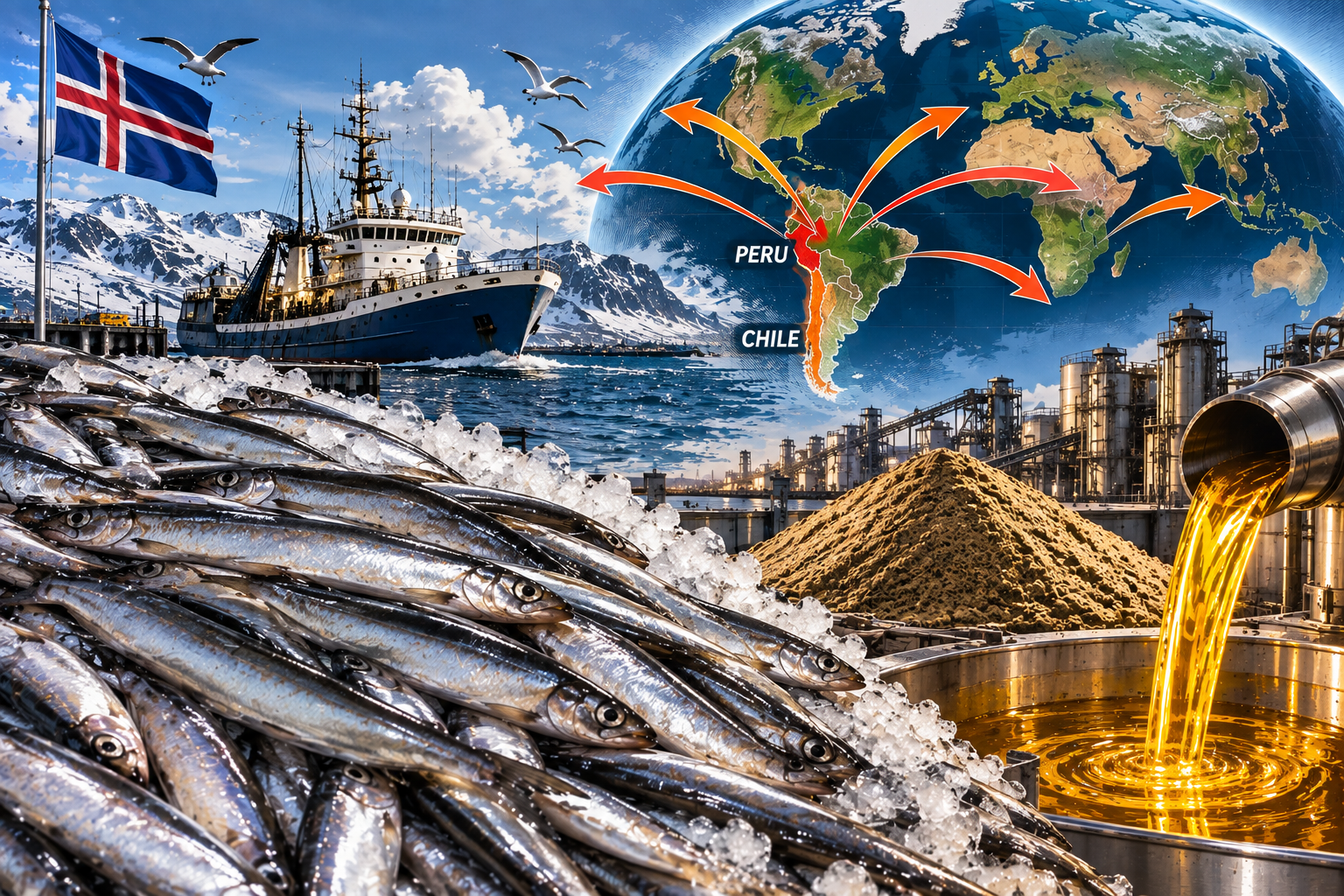
世界のフィッシュミール・魚油供給が2016年以来の低水準へ、アイスランドのカペリン漁への影響にも注目
Global Fishmeal and Fish Oil Supply Expected to Fall to Lowest Level Since 2016 – Attention Turns to the Impact on Icelandic Capelin
2026年10月5日、IFFO(The Marine Ingredients Organisation/国際魚粉魚油機構)が、世界のフィッシュミールおよびフィッシュオイルの供給見通しについて最新情報を発表した。
IFFOによると、2026年8月はチリ、スペイン、米国を中心に原料供給が改善したものの、年初からの累計では依然として大幅な減産が続いている。
IFFO加盟企業のデータに基づく調査対象国では、8月までのフィッシュミール累計生産量は前年同期比45%減、フィッシュオイルは26%減となった。
最大の要因となっているのがペルーである。
ペルーは平年、世界のフィッシュミールおよびフィッシュオイル生産量の約20%を占めるが、2026年は北部・中部海域の漁期閉鎖が長期化し、アンチョベータを中心とする原料供給量が極めて低い水準にとどまっている。
9月15日にはPeruvian Marine Research Institute(Imarpe)がアンチョベータの新たな資源評価調査を開始しており、10月7日に終了する予定となっている。また、ペルー沿岸では海水温の高い状態が長期化するとの予想もあり、El Niñoの影響が引き続き懸念されている。
IFFOは、2026年の世界のフィッシュミール供給量が460万トンを下回ると予測している。これは453万トンだった2016年以来の最低水準となる。
フィッシュオイルについても、世界の供給量は約115万トンまで減少すると予測されており、こちらも約113万トンだった2016年以来の最低水準となる見通しである。
特に浮魚および底魚を原料とする生産量の減少が目立ち、フィッシュミールは約360万トン、フィッシュオイルは約60万5,000トンと予測されている。
一方、サーモンやパンガシウスなど、その他の魚種を原料とするフィッシュオイルについては増加が見込まれている。
中国でも9月末時点で輸入フィッシュミール在庫の減少が続いており、平均的な水準を大きく下回っている。また、禁漁期間終了後の中国国内の生産量についても期待を下回っているという。
【今後注目されるアイスランドのカペリン】
今回のIFFOの発表を見て、今後注目したいのがアイスランドのカペリン漁への影響である。
来シーズン、アイスランドで相応のカペリン漁獲枠が設定された場合、そのうちどの程度の数量がフィッシュミール・フィッシュオイル向けに回されるのか、また、その際のカペリン原料価格がどの程度の水準になるのかが大きなポイントになると考える。
世界的にフィッシュミール・フィッシュオイルの供給が減少している状況では、カペリンをミール・オイル原料として利用する経済的な魅力も高まる可能性がある。
その場合、漁獲枠が増えたとしても、必ずしもその増加分がすべて冷凍カペリンとして市場に供給されるとは限らない。
どの程度がミール・オイル向けに回り、どの程度が冷凍製品として生産されるのか。その配分によっては、冷凍カペリンの実際の供給量や原料価格にも影響を与える可能性がある。
特にフィッシュオイルについては世界供給が2016年以来の低水準になると予測されているだけに、今後のアイスランドにおけるカペリンの用途別配分と価格形成を注視していきたい。
出典:
IFFO – The Marine Ingredients Organisation
「El Niño remains a concern, with expectations of a prolonged coastal warming in Peru」
2026年10月5日
https://www.iffo.com/el-nino-remains-concern-expectations-prolonged-coastal-warming-peru
On October 5, 2026, IFFO – The Marine Ingredients Organisation published its latest update on the global supply outlook for fishmeal and fish oil.
According to IFFO, although raw material supply improved in August 2026, particularly in Chile, Spain and the United States, cumulative production for the year remains significantly below last year’s level.
Based on data from IFFO members, cumulative fishmeal production through August was 45% lower than during the same period in 2025, while fish oil production was down 26%.
The main factor behind this decline continues to be Peru.
In an average year, Peru accounts for approximately 20% of global fishmeal and fish oil production. However, in 2026, the prolonged closure of the fishing season in the North-Centre region has kept raw material intake at extremely low levels.
On September 15, the Peruvian Marine Research Institute (Imarpe) began a new assessment of the anchovy stock, with the study scheduled to conclude on October 7. El Niño also remains a concern, with prolonged coastal warming expected in Peru.
IFFO forecasts that global fishmeal supply in 2026 will fall below 4.6 million metric tonnes. This would be the lowest level since 2016, when global supply stood at 4.53 million metric tonnes.
Global fish oil supply is also expected to decline to approximately 1.15 million metric tonnes, which would likewise be the lowest level since 2016, when total production was estimated at around 1.13 million metric tonnes.
Fishmeal production from pelagic and demersal raw materials is forecast at approximately 3.60 million metric tonnes, while fish oil production from these sources is expected to reach around 605,000 metric tonnes.
In contrast, fish oil production from other species is expected to continue increasing, particularly from salmon and pangasius.
In China, imported fishmeal stocks continued to decline at the end of September and remained well below average levels. Domestic production following the fishing moratorium has also been lower than expected.
【Attention Now Turns to Icelandic Capelin】
Against this background, one of the key points to watch will be how the current global fishmeal and fish oil situation may affect the coming Icelandic capelin season.
If a substantial capelin quota is allocated for the coming season, an important question will be how much of the catch will be directed to fishmeal and fish oil production, and at what price level capelin raw material will be valued for this purpose.
With global supplies of fishmeal and fish oil declining, the economic attractiveness of using capelin as a raw material for meal and oil production could increase.
Therefore, even if Iceland receives a larger capelin quota, it does not necessarily mean that the entire increase will become available to the frozen capelin market.
The balance between the volume allocated to fishmeal and fish oil production and the volume frozen for human consumption could have an important impact on the actual supply and price of frozen capelin.
With global fish oil supply in particular forecast to fall to its lowest level since 2016, it will be important to closely monitor how Icelandic producers allocate capelin between frozen products and meal/oil production, as well as the price levels that develop for each use.
Source:
IFFO – The Marine Ingredients Organisation
“El Niño remains a concern, with expectations of a prolonged coastal warming in Peru”
5 October 2026
https://www.iffo.com/el-nino-remains-concern-expectations-prolonged-coastal-warming-peru