2026年サバ生態系調査が終了 若いサバは南部、大型魚は北部に分布
2026 International Mackerel Ecosystem Survey Completed: Young Mackerel Found in the South, Larger Fish in the North
ノルウェー海洋研究所(Havforskningsinstituttet)は、2026年の国際サバ生態系調査(IESSNS)が終了したと発表した。
今年の調査には、ノルウェー、フェロー諸島、アイスランド、デンマークの5隻の調査船が参加し、ノルウェー海および周辺海域におけるサバ、ノルウェー春産卵ニシン、ブルーホワイティングの資源分布を調査した。
今年はNorges Sildesalgslag(ノルウェー・ニシン販売組合)の追加資金により、調査船「Eros」と「Vendla」の調査期間がそれぞれ3日間延長された。また、2025年にサバの分布密度が最も高かった海域では調査点数を増やし、資源量推定の精度向上と不確実性の低減が図られた。
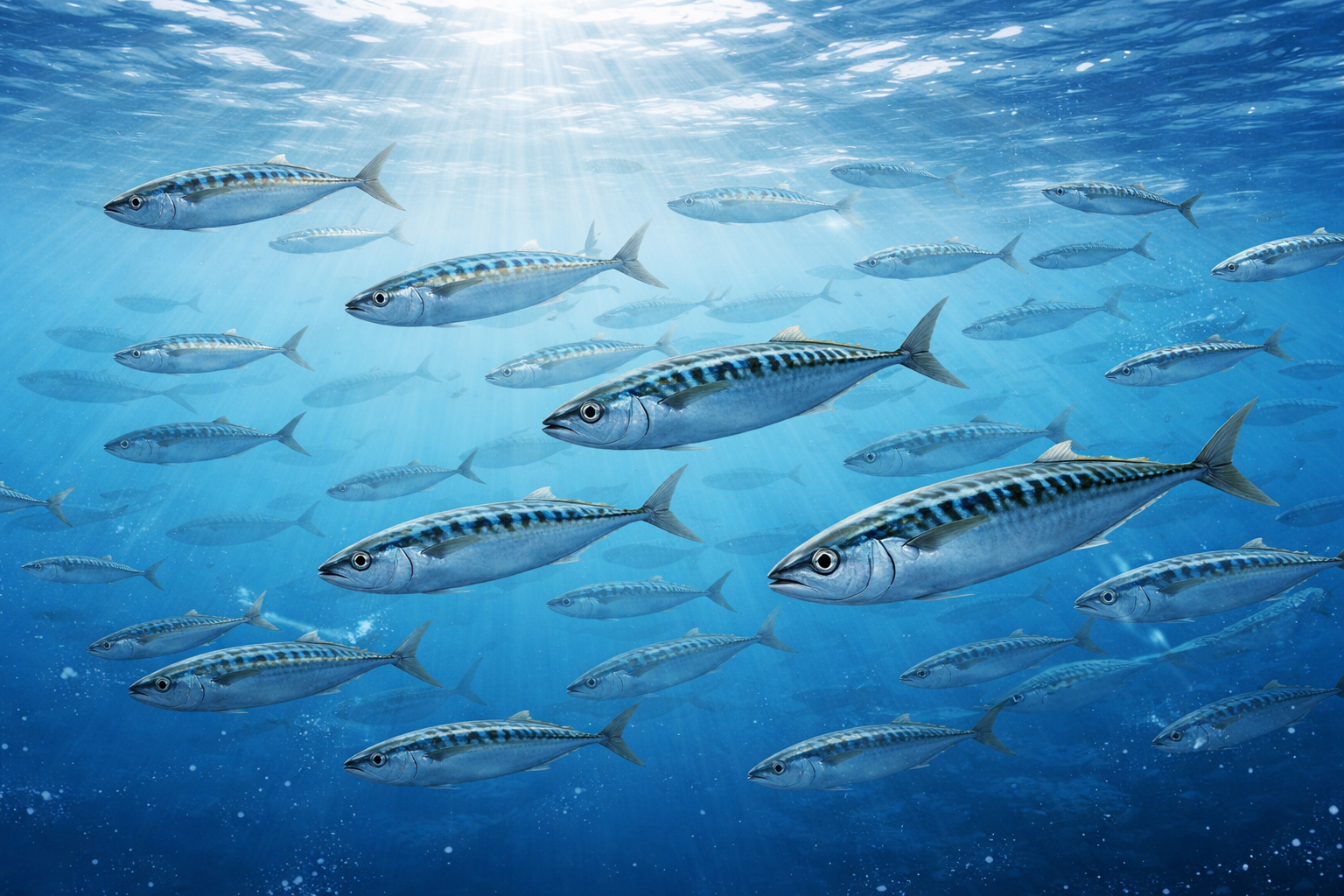
調査の結果、サバの全体的な分布は昨年とほぼ同じ傾向を示したものの、経度0度付近ではやや南寄りに分布していた。若いサバは主に北緯64度以南に分布し、一方で大型かつ脂の乗った個体はノルウェー海北西部から北部で多く確認され、最大870gに達する個体も採集された。
ノルウェー春産卵ニシンでは、大型魚がノルウェー海中央部に集中し、若齢魚はノルウェー海北東部からバレンツ海南西部にかけて広く分布していた。
ブルーホワイティングは今年も資源量が非常に多く、広範囲で強い魚群反応が確認された。漁獲の主体は若齢魚であったが、水深150~400mでは高齢魚も確認されている。
また、海洋哺乳類の観察も並行して実施され、ノルウェー海北部ではヒゲクジラ類やイルカ類の出現が多かった。カペリンの群れが確認された海域では、ナガスクジラやザトウクジラ、カマイルカなどが採餌する様子が数多く観察され、Svalbard南方では4頭のシロナガスクジラも確認された。
今回得られたデータは、8月にコペンハーゲンで開催されるIESSNS会議で各国研究者による解析が行われ、その後のICES資源評価や2027年の漁獲勧告の基礎資料となる予定である。
引用・参考ノルウェー海洋研究所(Havforskningsinstituttet)
https://www.hi.no/hi/nyheter/2026/juli/makrell-okosystemtoktet-avsluttet-okt-innsats-i-hovedomradene-for-makrellutbredelse
The Norwegian Institute of Marine Research (Havforskningsinstituttet) has announced the completion of the 2026 International Ecosystem Survey in the Nordic Seas (IESSNS).
Five research vessels from Norway, the Faroe Islands, Iceland, and Denmark participated in the survey, which investigated the distribution of mackerel, Norwegian spring-spawning herring, and blue whiting throughout the Norwegian Sea and adjacent waters.
This year’s survey was strengthened by additional funding from the Norwegian Fishermen’s Sales Organization for Pelagic Fish (Norges Sildesalgslag), allowing the chartered vessels “Eros” and “Vendla” to extend their survey by three days each. Survey stations were also increased in the areas where the highest concentrations of mackerel were recorded in 2025, improving the precision of biomass estimates while reducing uncertainty.
The overall distribution of mackerel was similar to last year. However, the stock was located slightly farther south along the 0° longitude. Younger mackerel were mainly distributed south of 64°N, while the largest and fattest fish were found in the northwestern and northern Norwegian Sea, with the biggest individuals reaching 870 grams.
For Norwegian spring-spawning herring, the largest fish were concentrated in the central Norwegian Sea, while juvenile herring were widely distributed across the northeastern Norwegian Sea and the southwestern Barents Sea.
Blue whiting appeared to be abundant throughout the survey area. Most catches consisted of juvenile fish, although older fish were also collected at depths between 150 and 400 meters.
Marine mammal observations were conducted simultaneously throughout the survey. Baleen whales and smaller dolphin species were observed more frequently in the northern Norwegian Sea. Feeding fin whales, humpback whales, and white-beaked dolphins were often associated with schools of capelin, while four blue whales were also recorded south of Svalbard.
The survey results will be analyzed during the IESSNS post-cruise meeting in Copenhagen this August and will contribute to the ICES stock assessment and fisheries advice for 2027.
Source:
Norwegian Institute of Marine Research (Havforskningsinstituttet)
https://www.hi.no/hi/nyheter/2026/juli/makrell-okosystemtoktet-avsluttet-okt-innsats-i-hovedomradene-for-makrellutbredelse